


Air Strike Force: 1945 WWII
3.93.00 Reviews
App Specs
- Version
- 1.7
- Updated On
- License
- Free
- Downloads
- 10,000+
- Developer
- Shooter Games and FPS
- Categories
- Comics
- Platform
- Android
Screenshots
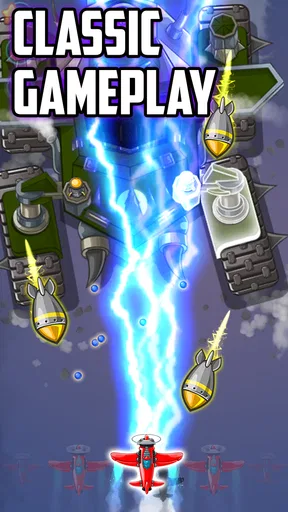
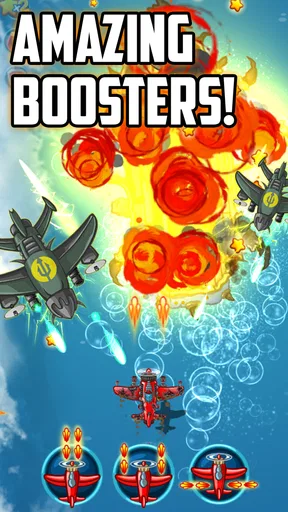
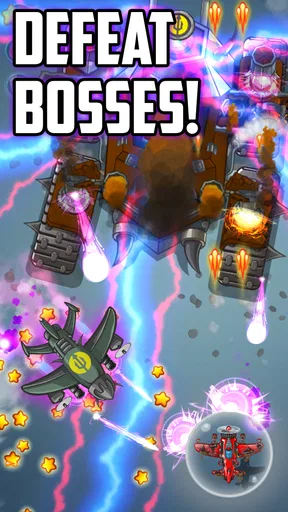
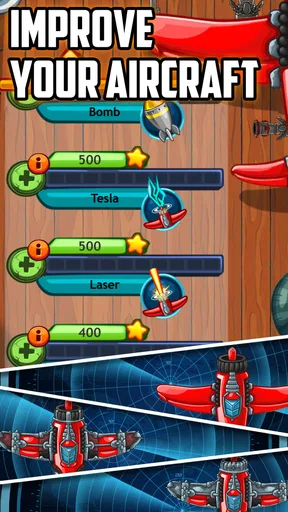
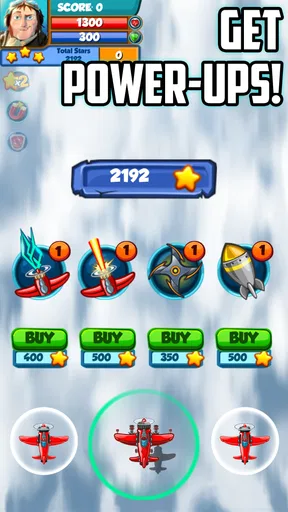
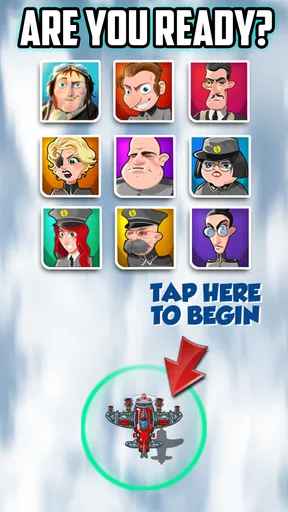
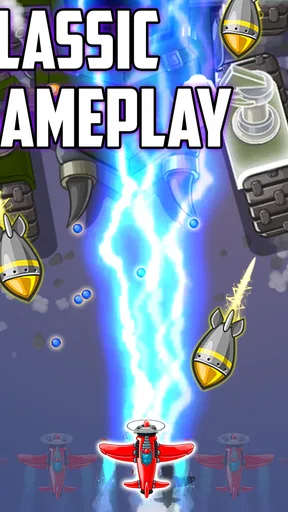
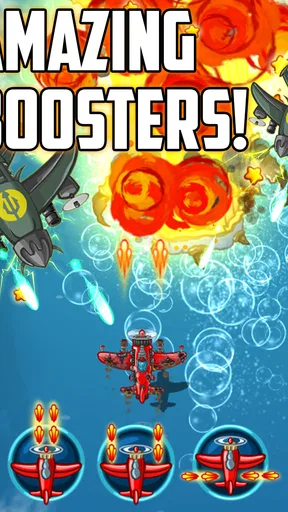
 Analysis by AppCompare
Air Strike Force: 1945 WWII is a free comic-style app built around an air-combat theme, and my first impression was that it aims for quick, easy-to-understand sessions rather than a deep simulation. The presentation points toward wartime aircraft and arcade action, while the store summary frames the experience as taking a solo mission and controlling the sky. That makes it an interesting option for people who want a lightweight military-flavored distraction on a phone, especially when the appeal is more about immediate action than a detailed historical campaign.
I approached it as an Android user looking for something simple to pick up between other tasks. The app comes from Shooter Games and FPS, sits in the Comics category, and is free to install. Its age rating is Everyone 10+, so it is positioned for a broad audience, although parents should still remember that a wartime air-strike theme may not suit every younger player. The overall rating is 3.9 from around 95 ratings, with over 10K installs, which suggests a modest but real audience rather than a major mainstream hit.
How connectivity changes the experience
I find connectivity worth considering before a short session, not just when something goes wrong: it can affect whether the app fits a commute, a break, or a quiet moment at home. I’d first try it in a dependable-signal setting, then decide whether it earns a place in my routine. That practical test leads naturally to the next question: how well does the experience suit the small-screen format?
Network-dependent moments matter more than the store pitch suggests
The central attraction is the feeling of launching into an air mission quickly, but a mobile app is never judged only by its theme. I also pay attention to what happens around the action: installation, first launch, loading, interruptions, and returning to the app after another task. Those moments are particularly important here because the available description emphasizes the fantasy of ruling the sky, not the practical conditions under which the app behaves best.
I would therefore treat a stable connection as the safest starting point, especially during the initial setup and whenever the app needs to load something. I would not plan a long session around an assumption that every part works without a network. That distinction is useful for commuters and travelers: a game that looks suitable for a short flight or underground ride is not automatically dependable in those situations. If you are about to lose reception, open it beforehand and check whether the screen you need is already available rather than assuming it will be.
This also affects expectations about interruptions. A brief signal drop can be harmless in one app and disruptive in another. With a mission-focused title, losing the connection at the wrong moment can make a short session feel less reliable, even if the actual action is enjoyable. My practical recommendation is to use it when you have a reasonably steady connection until you have personally tested how it behaves in your usual weak-signal locations.
Why the mobile format suits quick air missions
The strongest fit is the five-minute gap: waiting for an appointment, taking a break from study, or sitting at home with enough time for a short burst but not enough patience for a large campaign game. The air-strike concept is immediately readable, so I do not need to learn a complicated fictional world before understanding what I am supposed to do. That directness is a genuine advantage on a small screen.
Worth Reading Before You Choose

Flipboard Shows What News Apps Must Do Beyond the Feed

Switching to Android Auto Means Rethinking Your Driving Routine

Google Calendar Makes a Crowded Week Easier to Manage

Ludo King Makes the Most of the Minutes Between Plans

Baby Panda World Brings Quick Play to Modern Phones, but Its Game Library Feels Busy

ESPN’s Live Game View Makes Following Close Games Easier
It is also a reasonable choice for players who like military imagery but do not want a realistic flight simulator. A simulator normally asks for patience, careful controls, and a willingness to study aircraft behavior. This app is better approached as accessible comic-book action. If your priority is authentic aircraft history, cockpit detail, or a long narrative, I would choose a dedicated aviation game instead. If your priority is pressing into a recognizable aerial battle mood without a steep learning curve, the simpler direction makes more sense.
On a phone, control comfort becomes part of the review. I found that short sessions are easier to manage because the screen stays focused on the immediate task. Longer play can expose the usual mobile compromises: fingers cover part of the display, repeated movement can become tiring, and small mistakes feel more frustrating when the controls are touch-based. I would use a relaxed grip, avoid playing while walking, and keep brightness at a level that lets aircraft and hazards remain visible without quickly draining the battery.
A realistic everyday scenario
Imagine opening the app during a lunch break with a reliable office or home connection. I would start a mission, play until the session reaches a natural stopping point, and then close it before returning to work. That is the kind of use where its direct theme helps: there is no need to commit an entire evening or remember a complicated plot. The same scenario becomes less appealing if the connection is unstable, notifications repeatedly pull the app into the background, or you are trying to play in a crowded place where attention is divided.
For that reason, I see it as a deliberate short-break app rather than something I would keep running all day. It can fill a gap, but it should not be confused with a full replacement for a console-style campaign. The best result comes from setting a small expectation: one or two focused sessions, not an uninterrupted marathon.
What happens when a session fails?
Failure and recovery are where I become more cautious. Any action app can feel fine when everything goes smoothly, but the real test is what happens after a crash, a forced background switch, or a lost signal. I recommend closing unnecessary apps first, keeping the operating system current, and reopening the title if a screen becomes unresponsive rather than repeatedly tapping the same control. Those steps will not solve every problem, but they reduce avoidable pressure on a phone.
If you are in the middle of a mission when reception drops, I would assume that progress may not be protected until you have seen how the app behaves on your device. Avoid treating an unstable connection as a safe place to attempt a long run. A useful habit is to finish a natural segment before moving between Wi-Fi and mobile data. That is a small change, but it reduces the chance that a transition happens during the most important part of a session.
Recovery also includes your own expectations. A free app with a straightforward arcade identity may be worth reopening after a minor interruption, but it is not worth repeatedly fighting your phone for hours. If the title frequently fails in your normal environment, that is a sign to move on rather than keep troubleshooting a game that is meant to provide quick entertainment.
Keeping data use under control
Because the app is free, I would pay attention to the moments that may involve network activity rather than leaving mobile data enabled without thinking. The safest routine is to launch and update it over Wi-Fi when possible, then avoid unnecessary switching between networks while playing. I also would not repeatedly restart the app on cellular data just to check whether a temporary problem has disappeared.
There is another cost to consider besides data: in-app purchases range from $0.99 to $39.99 per item. That does not make the app unsuitable, but it does make purchase discipline important. I would decide in advance whether I am only trying the free experience and use device-level purchase controls if children share the phone. The lower-priced options may look minor individually, while the upper end deserves a deliberate decision rather than an accidental tap during a moment of frustration.
For a data-conscious player, the most sensible workflow is simple: install over Wi-Fi, test the app in a controlled setting, and use cellular data only when the connection is strong enough to make the session worthwhile. I would also avoid playing in places where a weak signal forces constant retries. This is not just about saving megabytes; repeated failed loading can make the app feel much worse than it does under normal conditions.
What the version and platform details mean in practice
The current version is 1.7 and the minimum operating system is Android 11. That gives potential users a clear compatibility check before installing: older Android devices may not qualify, while phones running Android 11 or later are the intended starting point. I would still leave some free storage and close demanding background apps, particularly on an older compatible phone, because action scenes are less enjoyable when the device is already struggling.
The release date was May 19, 2022, so I would approach it as an established app rather than a brand-new launch. That matters when deciding how much polish and ongoing change to expect. Someone who wants the newest graphics, frequent feature additions, or a large active community may be happier with a newer title. Someone who simply wants this particular World War II air-combat flavor can judge it on its current experience instead of expecting a constantly evolving service.
The developer name, Shooter Games and FPS, also sets a useful expectation. I would look at this as a focused genre product, not as a broad comics reader despite its store category. The Comics label may attract people browsing illustrated entertainment, but the actual appeal is the air-strike fantasy. If you are searching for panels, serialized stories, or a traditional comic library, this is the wrong kind of app even though it appears in that category.
Who should try it, and who should skip it?
I would recommend giving it a chance if you enjoy accessible aerial combat, prefer short mobile sessions, and like a bold wartime comic atmosphere more than technical realism. It is also a sensible trial for a player who wants a free starting point before committing money to a larger flight game. The modest audience and middling rating suggest that expectations should stay measured, but they do not erase the possibility that its direct style will fit your habits.
I would skip it if your main requirement is dependable play in airplane mode, deep aircraft customization, a historically detailed campaign, or a carefully balanced competitive community. I would also be cautious if you dislike in-app purchase prompts or are likely to spend impulsively when a mission becomes difficult. In those cases, a paid game with a clearer one-time model, or a more established flight title, may be a better match.
Compared with a traditional comics app, this offers a more active and game-like way to engage with illustrated war imagery, but it will not replace reading. Compared with a serious flight simulator, it should be easier to approach but less satisfying for someone who wants authentic controls. Compared with a large arcade shooter, its smaller footprint and narrower premise may be appealing, though it may not offer the same breadth or polish. Those trade-offs are more useful than simply calling it fun or disappointing.
My practical verdict on connectivity
Connectivity is not a side issue for this app; it shapes whether a quick mission feels convenient or irritating. I would install and test it on Wi-Fi, use it first in a stable-signal setting, and only then decide whether it belongs in my mobile rotation. That approach also gives me a chance to understand how interruptions affect sessions before relying on it during travel or a commute.
My final view is cautiously positive for the right player. Air Strike Force: 1945 WWII has a clear identity, a free entry point, and an approachable air-combat premise. Its main weakness is not the idea itself but the uncertainty that comes with using a mobile action app in unreliable network conditions and around optional purchases. If you want a quick, comic-styled aerial distraction and are comfortable testing it on your own phone, it is worth trying. If you need a guaranteed offline companion or a deep aviation experience, choose something designed specifically for those priorities.
For me, the deciding phrase is use it as a short-session action app, not as a guaranteed travel game. Keep the connection steady, protect yourself from accidental purchases, and judge the controls during a calm trial rather than during a rushed commute. With those limits in mind, the app can deliver the straightforward sky-battle escape it promises without asking you to treat it as more than it is.
Pros
- Simple controls make the game easy to pick up.
- Varied aircraft and weapons add progression goals.
- Short missions suit quick gaming sessions.
- Offline play is useful when no connection is available.
- Classic WWII-style visuals create a nostalgic atmosphere.
Cons
- Upgrade costs can make later progression feel slow.
- Repeated enemy patterns may reduce challenge over time.
- Frequent ads can interrupt the gameplay experience.
- Some aircraft and upgrades require significant grinding.
- Device performance may drop during crowded battles.
FAQs for Air Strike Force: 1945 WWII
What is Air Strike Force: 1945 WWII?
Air Strike Force: 1945 WWII is an arcade-style mobile shooting game inspired by World War II aerial combat. You control a fighter aircraft, fly through enemy territory, and battle waves of planes, ships, ground defenses, and powerful bosses. Its gameplay focuses on quick reflexes, continuous shooting, aircraft upgrades, and short missions that are suitable for casual play on Android and iOS devices.
How does the gameplay work, and is it suitable for beginners?
The game generally uses simple touch controls, allowing you to move your aircraft across the screen while weapons fire automatically or with minimal input. This makes the basic controls easy to understand, even for players who are new to shoot ’em up games. However, later missions become more challenging, requiring careful movement, awareness of enemy attack patterns, and smart use of special abilities.
Can I upgrade or customize my aircraft?
Yes, aircraft progression is an important part of Air Strike Force: 1945 WWII. As you complete missions and collect rewards, you can typically improve offensive power, defensive strength, shooting speed, and other combat attributes. Depending on the available version, you may also unlock different planes or weapons. Upgrading regularly is recommended because simply relying on the starting aircraft can make advanced stages difficult.
Does Air Strike Force: 1945 WWII require an internet connection?
The connection requirements may vary according to the game version, device, and features being accessed. Basic missions may work in limited offline situations, but an internet connection can be necessary for advertisements, cloud-related features, rewards, events, updates, or purchases. Before downloading, check the store listing and test the game on your device if offline access is especially important to you.
Is Air Strike Force: 1945 WWII free to download, and does it include ads or in-app purchases?
Air Strike Force: 1945 WWII is generally offered as a free download, which allows players to try the core gameplay without paying upfront. Like many free mobile games, it may include advertising and optional in-app purchases for currency, upgrades, extra lives, or other advantages. You can usually progress without spending money, although patience and repeated play may be needed to advance more comfortably.


